2026 Best Floating Connector Types for Global Buyers

Time:2026-09-19 Author:Isabella
0%

Choosing the right Floating Connector can determine whether a compact electronic assembly survives real-world misalignment, vibration, and repeated servicing. Global buyers now compare more than pin count and price. They examine contact stability, mating tolerance, current capacity, insulation materials, and supplier consistency. A connector may look perfect in a catalog, yet fail when two boards shift by a few millimeters.

This guide reviews the best Floating Connector types for 2026, including board-to-board, cable-to-board, self-aligning, and vibration-resistant designs. It considers practical uses in industrial controls, medical equipment, automotive electronics, robotics, and consumer devices. Buyers should inspect drawings, mating cycles, temperature ratings, plating options, and available test reports. Small details matter. A gold-plated contact, for example, can reduce oxidation in demanding environments, but it does not solve poor mechanical alignment.

Real selection is rarely simple. Cost pressure often conflicts with durability. Compact connectors may save space but limit current handling. Some suppliers provide excellent samples, then struggle with production consistency. That risk deserves attention. This overview uses engineering criteria, supplier evaluation methods, and application-focused comparisons to support more reliable purchasing decisions. It does not treat one connector as universally superior. The best choice depends on movement, load, environment, assembly method, and expected service life. Some recommendations may still require testing, because laboratory assumptions can differ from factory conditions. In practice, a short trial run can reveal more than a polished specification sheet.
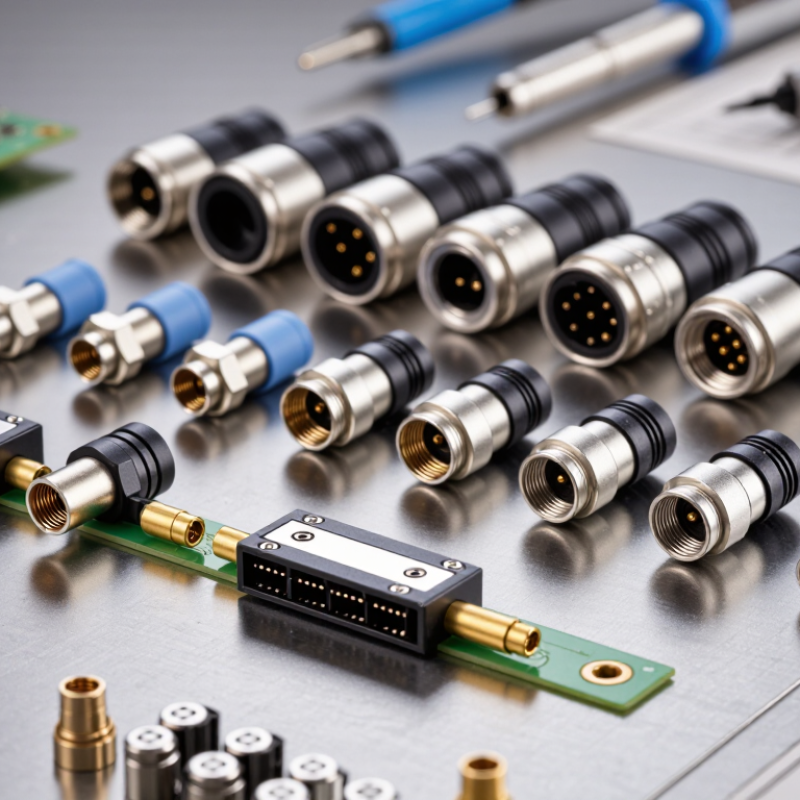
2026 Best Floating Connector Types for Global Buyers

Floating Connector Fundamentals: Self-Alignment, Compliance, and Contact Stability

2026 Best Floating Connector Types for Global Buyers

Floating connectors are designed to absorb small positional errors during assembly. Their movable housing allows contacts to align before full mating. This matters when two circuit boards shift by a fraction of a millimeter. Board-to-board floating connectors suit compact equipment, control modules, and high-density assemblies. Cable-to-board versions can reduce stress where wires move during installation. The correct type depends on travel, pitch, mating force, and operating vibration.

Self-alignment begins with guided housings and chamfered mating features. Compliance usually comes from a movable contact block or flexible mounting structure. This movement helps each terminal meet its counterpart instead of scraping across it. Contact stability still depends on contact pressure, plating quality, and mechanical retention. A stable contact should resist vibration without creating excessive insertion force. Small errors here become visible as heat, intermittent signals, or premature wear.

Real evaluations should include repeated mating, side-load testing, and temperature cycling. Measure contact resistance before and after testing. Watch for housing movement that feels loose. It may indicate useful compliance, but it may also reveal weak retention. That distinction is easy to miss. Designers should also leave clearance around the floating mechanism. I have seen compact layouts fail because nearby components blocked the connector’s travel. Datasheet values help, but prototype measurements remain essential. A connector that aligns perfectly on a clean bench may behave differently inside a vibrating enclosure.

Key Types: Board-to-Board, Wire-to-Board, and Blind-Mate Floating Designs

2026 Best Floating Connector Types for Global Buyers

Floating connectors help compensate for small alignment errors during assembly. The right type depends on movement, current, signal speed, and service access. Board-to-board floating designs suit modular equipment, backplanes, and compact control units. Their guided structure absorbs lateral offsets while maintaining electrical contact. Buyers should check pitch, stack height, contact force, and rated mating cycles. Fit matters.

Wire-to-board floating connectors support harness routing where boards cannot remain perfectly fixed. They work well in industrial controllers, lighting equipment, and mobile machinery. Look for secure latches, clear polarization, strain relief, and temperature-resistant materials. A connector may accept misalignment, but excessive cable pull can still damage the interface. Tolerance is real.

Blind-mate floating connectors are valuable when technicians cannot see the mating surfaces. They support removable modules, battery compartments, and rack-mounted systems. Guide posts, lead-in chamfers, and staged contacts can reduce insertion force and prevent pin damage. In practical evaluations, buyers should test vibration, dust exposure, repeated insertion, and uneven mounting pressure. A wider floating range is not automatically better; it can increase movement during operation. That detail is easy to overlook. Global sourcing also requires dependable drawings, traceable material data, and consistent inspection records. Some suppliers provide impressive samples, yet production consistency may remain uncertain. A pilot batch and application-specific validation are safer than relying on catalog values alone.

High-Speed Benchmarks: USB4 Version 2.0 at 80 Gb/s and PCIe 6.0

For global buyers, floating connectors are becoming practical choices for high-speed equipment. Their movable contact structure absorbs small alignment errors during assembly and repeated mating. This matters in servers, storage systems, industrial controllers, and compact computing platforms.

USB4 Version 2.0 can reach 80 Gb/s under suitable host, cable, and device conditions. At this rate, connector geometry becomes a signal-integrity decision, not merely a mechanical detail.

Buyers should inspect differential impedance, crosstalk, insertion loss, shielding, and thermal behavior. A floating design may reduce contact stress, but it cannot repair poor routing or an unsuitable cable. Test results matter more than headline speed.

PCIe 6.0 raises the challenge further with 64 GT/s per lane, PAM4 signaling, and FLIT-based transmission. Floating board-to-board connectors must maintain stable contact pressure and controlled electrical paths. Qualification should include eye analysis, bit-error testing, vibration exposure, and temperature cycling. Ask for measured data across the intended mating cycles. Laboratory results can look excellent, yet field alignment may be less forgiving. I have seen designs pass bench tests and require layout changes later. That weakness deserves honest review. Low-profile and right-angle variants may save space, but their performance depends heavily on stack height and grounding.

Reliability Testing: IEC 60512, Mating Cycles, Vibration, and Temperature

2026 Best Floating Connector Types for Global Buyers

Floating connectors are increasingly used where boards shift during assembly or thermal cycling. The market is expanding. MarketsandMarkets estimates the global connector market will grow from about USD 84 billion in 2024 to USD 107 billion by 2029. Reliability testing therefore deserves more attention than catalog specifications.

IEC 60512 provides practical methods for testing electrical connectors. Buyers should request contact resistance measurements before and after mating-cycle tests. A 500-cycle test is common for industrial designs, while higher-cycle programs may suit serviceable equipment. The exact number must match the application. More cycles do not automatically mean better field performance.

Test fixtures should also include random vibration, shock, and temperature cycling. For example, testing may move between -40°C and 125°C, with resistance recorded at each stage. IEC 60512 vibration methods help expose fretting, terminal movement, and intermittent signals. I have seen connectors pass static continuity checks but fail after vibration. That gap is easy to miss.

Reports from the International Energy Agency show continued growth in electrification and power electronics deployment. These systems often face heat, vibration, and frequent maintenance access. A floating structure can absorb alignment errors, but it cannot repair weak plating or poor retention. Buyers should ask for raw test curves, fixture details, sample quantities, and failure criteria. A polished certificate is not enough. Sometimes, the test plan needs revision.

2026 Best Floating Connector Types for Global Buyers

Reliability Testing: IEC 60512, Mating Cycles, Vibration, and Temperature

The chart presents representative qualification-planning values for common floating connector applications. IEC 60512 provides standardized test methods, while actual mating-cycle counts, vibration duration, and thermal-cycle requirements are defined by the product specification and application environment. Values shown are non-brand reference profiles for global sourcing comparisons.

Global Buyer Criteria: 0.5 mm Pitch, RoHS, REACH, IP Ratings, and Cost

2026 Best Floating Connector Types for Global Buyers

A 0.5 mm pitch saves board space, but it reduces tolerance for dust, warpage, and assembly error. In prototype reviews, floating connectors help absorb small alignment shifts between boards. Choose the floating range carefully. Excessive movement can weaken contact stability. The WSTS Spring 2025 Forecast expects the global semiconductor market to reach about 784 billion dollars in 2026. That growth increases pressure on compact, reliable interconnects. Still, connector demand does not justify accepting weak test evidence.

Compliance must be documented, not assumed. Request a current RoHS declaration, REACH status, material composition, and change-control procedure. The European Chemicals Agency updates its Candidate List as substances receive SVHC classification. Check the revision date. For harsh environments, read the complete IEC 60529 test basis behind an IP rating. IP67 may protect against temporary immersion, but it does not guarantee vibration performance or repeated mating durability. Cost comparisons should include tooling, inspection, plating, packaging, and field returns. A cheaper part can become expensive quickly. I have seen this overlooked.

Tips: Build a 0.5 mm pitch sample set before volume approval. Measure mating force, contact resistance, coplanarity, and retention after thermal cycling. Ask for test conditions and sample sizes. If the supplier provides only a certificate, pause. A certificate alone is not qualification. Also, do not rank IP ratings above every factor; sealing can increase cost and mating force. The best choice is sometimes less elegant, and that deserves a second review.

2026 Best Floating Connector Types for Global Buyers

Global Buyer Criteria: 0.5 mm Pitch, RoHS, REACH, IP Ratings, and Cost

Floating Connector Type Typical Application Available 0.5 mm Pitch Typical Floating Compensation Typical Contact Count Typical Current per Contact Common IP Configuration RoHS / REACH Availability Indicative Unit Cost at 10,000 pcs Global Buyer Assessment
Floating Board-to-Board Compact control boards, displays, industrial electronics Yes ±0.30–0.50 mm 20–80 0.3–1.0 A IP20; higher only with enclosure Declarations commonly available US$0.08–0.55 Best general-purpose option for low-profile, high-density board mating.
Floating Mezzanine Connector Stacked PCBs, computing modules, communication equipment Yes ±0.40–0.60 mm 30–120 0.3–0.8 A IP20; enclosure-dependent Declarations commonly available US$0.18–1.10 Strong choice when parallel PCB alignment and repeated assembly are important.
Floating FFC/FPC Connector Displays, cameras, scanners, printers, portable devices Yes ±0.20–0.40 mm 10–60 0.3–0.5 A IP20; sealed cable system required for IP ratings Declarations commonly available US$0.04–0.30 Lowest-cost option for flexible cable interfaces where environmental sealing is not required.
Floating Wire-to-Board Sensors, LED modules, appliances, small industrial assemblies Yes ±0.25–0.50 mm 2–20 0.5–2.0 A IP20; IP54–IP67 with sealed housing Declarations commonly available US$0.10–0.75 Practical for cable routing and moderate current, with optional protection through the housing design.
Blind-Mate Floating Connector Replaceable modules, rack systems, battery trays, serviceable equipment Yes ±0.50–1.00 mm 10–80 0.5–3.0 A IP20; IP54–IP65 with guides and seals Declarations commonly available US$0.35–2.20 Recommended where frequent mating and positional tolerance are more important than minimum cost.
Sealed Automotive-Style Floating Connector Vehicle electronics, outdoor controls, battery and power-management modules Selected designs ±0.30–0.70 mm 2–40 1–8 A IP65–IP67 when fully mated Declarations commonly available US$0.45–2.80 Best for moisture, dust and vibration exposure; verify mating, sealing and qualification requirements.
High-Speed Floating Connector Data-processing boards, networking equipment, high-speed backplanes Yes ±0.30–0.50 mm 40–200+ 0.3–0.5 A IP20; system enclosure required Declarations commonly available US$0.60–3.50 Suitable for dense signal routing; require insertion-loss, crosstalk and impedance test data before approval.
Floating Power-and-Signal Hybrid Robotics, motor controllers, modular industrial equipment Selected designs ±0.40–0.80 mm 6–50 2–15 A power contacts; 0.5–1 A signal contacts IP20; IP54–IP67 with sealed interface Declarations commonly available US$0.80–4.50 Useful when one floating interface must carry both power and control signals; confirm thermal derating.
Buyer Notes: Pitch availability, contact count, current rating and floating distance vary by construction. IP ratings apply to the complete mated interface and enclosure, not automatically to the connector component alone. RoHS and REACH status should be confirmed through current supplier declarations and material documentation. Prices are indicative bulk-purchase ranges in US dollars and exclude tooling, freight, taxes and qualification testing.

FAQS

Why are floating connectors useful in high-speed equipment?

Their movable contacts absorb small alignment errors during assembly and repeated mating. This helps in servers, storage systems, and compact computing platforms. They are helpful, not magical.

Can a floating connector guarantee 80 Gb/s performance?

No. Performance depends on the host, cable, device, routing, and connector design. Buyers should review impedance, crosstalk, insertion loss, shielding, and thermal behavior. Headline speed is not enough.

What should buyers check for advanced board-to-board links?

Check stable contact pressure and controlled electrical paths. Request eye analysis, bit-error testing, vibration testing, and temperature cycling. Results should cover the intended mating cycles. Bench success can still hide layout problems.

Which reliability tests are important for floating connectors?

Use mating-cycle, random-vibration, shock, and temperature-cycle tests. A practical temperature range may run from -40°C to 125°C. Record contact resistance at each stage. Static continuity alone is weak evidence.

How many mating cycles should a connector survive?

Around 500 cycles may suit some industrial designs. Serviceable equipment may require more. The correct target depends on maintenance frequency and field conditions. More cycles do not always mean better reliability.

What evidence should a supplier provide?

Ask for raw test curves, fixture details, sample quantities, and failure criteria. Request contact resistance before and after testing. A polished certificate is not qualification. I would pause without supporting data.

What are the risks of using a 0.5 mm pitch?

It saves board space but leaves less tolerance for dust, warpage, and assembly errors. Measure mating force, coplanarity, retention, and contact resistance. Build sample units before volume approval. Small gaps matter.

How should buyers evaluate compliance and environmental protection?

Request current material declarations, substance status, revision dates, and change-control procedures. Review the complete basis behind any ingress rating. An immersion rating does not prove vibration durability or mating-cycle strength. Sealing can also raise cost and mating force.

Conclusion

A Floating Connector is designed to accommodate small positional errors between mating components while maintaining stable electrical contact. Its self-alignment and mechanical compliance make it suitable for board-to-board, wire-to-board, and blind-mate applications, especially where assembly tolerances, movement, or limited visibility create connection challenges. Proper contact design also supports reliable performance in compact systems with demanding signal requirements.

For global buyers, selection should consider high-speed capability, including support for emerging USB4 Version 2.0 data rates up to 80 Gb/s and PCIe 6.0 applications, along with verified signal integrity. Reliability evaluation should include IEC 60512-based testing, mating-cycle endurance, vibration resistance, and operation across the intended temperature range. Other important criteria include 0.5 mm pitch options, RoHS and REACH compliance, suitable IP ratings, mechanical compatibility, availability, and total cost. A balanced review of electrical, mechanical, environmental, and regulatory requirements helps buyers choose a dependable solution for international product development.

Isabella

Isabella

Isabella is a dedicated marketing professional with a sharp focus on driving brand growth and engagement through strategic content creation. With an extensive background in digital marketing, she combines her passion for storytelling with her keen understanding of industry trends to deliver......