Choosing the best Lithium Battery Cells in 2026 requires more than comparing price, capacity, and product labels. Global buyers need evidence from laboratory testing, factory audits, and consistent shipment records. A cell may look excellent on paper, yet perform differently after months of storage or repeated charging. Real-world reliability matters.
This guide examines leading cell options for electric vehicles, energy storage systems, power tools, and portable equipment. It considers lithium iron phosphate, nickel-rich chemistries, cylindrical, prismatic, and pouch formats. Important details include energy density, cycle life, thermal stability, operating temperature, charging limits, and supplier traceability. Buyers should also review safety certifications, transport documentation, warranty terms, and regional compliance requirements. Numbers alone are not enough.
Supply conditions may change during 2026. So can raw material costs, production capacity, and regional demand. That uncertainty deserves attention. The strongest supplier today may not remain the strongest choice tomorrow. Procurement teams should request recent test reports, sample batches, and clear quality-control procedures before signing large contracts. Small inconsistencies can become expensive failures in a battery pack.
This overview does not treat one brand as universally superior. Application, climate, budget, and installation standards shape the final decision. Some published specifications may also depend on ideal testing conditions. Buyers should verify them independently. Practical judgment remains essential.
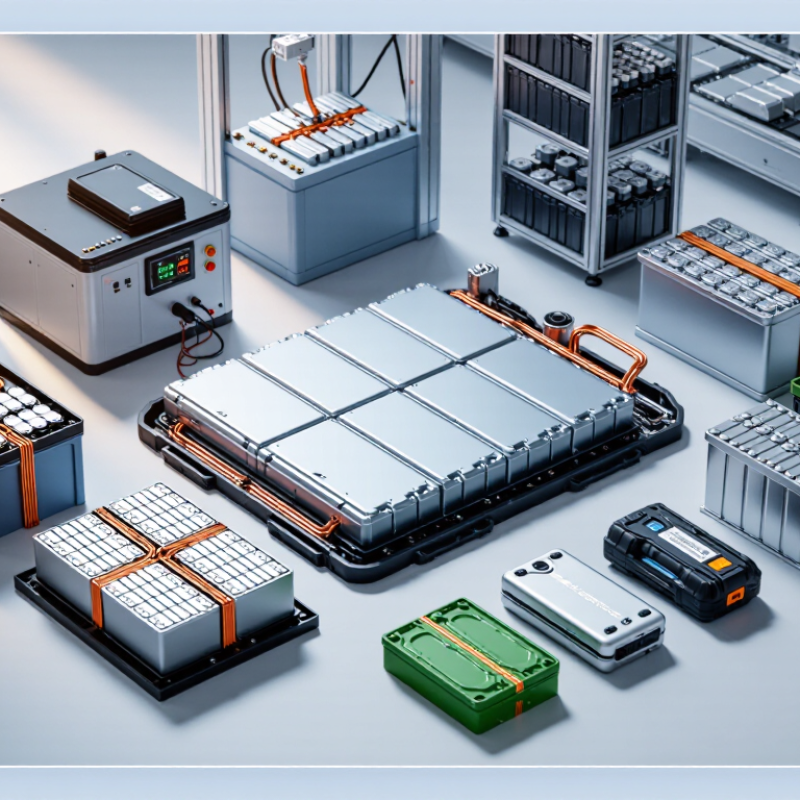
For 2026 global buyers, a lithium battery cell should be judged by more than capacity. Cell basics matter. Capacity, measured in ampere-hours (Ah), shows how much charge a cell stores. Nominal voltage describes its average operating level. Energy equals voltage multiplied by capacity, usually shown in watt-hours (Wh). Energy density matters when space is limited. The International Energy Agency reported that global electric-vehicle battery demand exceeded 1 TWh in 2024. That scale makes consistent cell testing increasingly important.
Key performance terms reveal practical behavior. C-rate indicates charging or discharging speed; 1C means a one-hour theoretical rate. Cycle life measures repeated charge and discharge before capacity falls to a stated percentage, often 80%. Internal resistance affects heat, power delivery, and efficiency. Buyers should also check operating temperature, state of charge (SOC), state of health (SOH), and voltage consistency. BloombergNEF reported an average lithium-ion battery pack price of 115 US dollars per kWh in 2024, but low price alone cannot prove quality. A high number can mislead.
Tips: Request test conditions, not only headline figures. Ask whether cycle-life data used constant temperature, controlled current, and a defined end-of-life point. Review batch records and independent laboratory results. I would avoid comparing cells from different chemistries without adjustment. Even honest datasheets may hide assumptions. That is where careful questions matter.
| Cell Chemistry or Term | What It Means | Typical Nominal Voltage | Indicative Gravimetric Energy Density | Typical Cycle-Life Range | Key Strengths | Main Limitations | Common Applications |
|---|---|---|---|---|---|---|---|
| Lithium Battery Cell Chemistry Comparison | |||||||
| Lithium Iron Phosphate (LFP) | A lithium-ion chemistry using lithium iron phosphate as the positive electrode material. | 3.2 V | Approximately 90–180 Wh/kg at cell level | Approximately 2,000–7,000 cycles, depending on depth of discharge, temperature and charging conditions | High thermal stability, long service life, good abuse tolerance and no nickel or cobalt in the cathode | Lower energy density than most nickel-rich chemistries; reduced power and capacity may occur in cold conditions | Stationary energy storage, commercial vehicles, buses, marine systems and electric passenger vehicles |
| Nickel-Manganese-Cobalt (NMC) | A lithium-ion chemistry that balances nickel, manganese and cobalt in the cathode. | 3.6–3.7 V | Approximately 150–260 Wh/kg at cell level | Approximately 1,000–3,000 cycles under moderate operating conditions | High energy density, good power capability and broad suitability for compact battery packs | More sensitive to high temperature and overcharge; contains nickel and cobalt; requires robust battery-management protection | Electric vehicles, power tools, mobility equipment and compact battery packs |
| Nickel-Cobalt-Aluminum (NCA) | A high-energy lithium-ion chemistry using nickel, cobalt and aluminum in the cathode. | 3.6–3.7 V | Approximately 180–280 Wh/kg at cell level | Approximately 1,000–2,000 cycles under controlled conditions | Very high energy density and strong continuous-power capability in suitably designed cells | Requires careful thermal management and protection; generally less tolerant of abuse than LFP | Long-range electric vehicles, high-performance equipment and aerospace-oriented systems |
| Lithium Titanate (LTO) | A lithium-ion chemistry that replaces the conventional graphite anode with lithium titanate. | 2.3–2.4 V | Approximately 50–100 Wh/kg at cell level | Approximately 5,000–20,000 cycles | Extremely fast charging capability, excellent low-temperature performance and very long cycle life | Low energy density, higher cost per stored watt-hour and lower pack voltage than most lithium-ion cells | Fast-charge buses, industrial vehicles, backup systems and high-cycle applications |
| Lithium Manganese Oxide (LMO) | A lithium-ion chemistry using a manganese-oxide cathode with a three-dimensional spinel structure. | 3.7–3.8 V | Approximately 100–150 Wh/kg at cell level | Approximately 500–1,500 cycles | Good power output, relatively low material cost and improved thermal behavior compared with some high-nickel chemistries | Moderate energy density and shorter cycle life; often blended with other cathode chemistries | Power tools, medical devices, hybrid vehicles and light electric mobility |
| Lithium Manganese Oxide–NMC Blend | A blended cathode design intended to combine LMO power capability with the energy density of NMC. | 3.6–3.7 V | Approximately 120–200 Wh/kg at cell level | Approximately 800–2,000 cycles | Balanced power, energy density and cost characteristics | Performance depends strongly on blend ratio, cell design and thermal-management quality | Electric tools, hybrid vehicles, electric motorcycles and general-purpose battery packs |
| Key Lithium Battery Cell Performance Terms | |||||||
| Nominal Voltage | The approximate average operating voltage of a cell during discharge. | Common lithium-ion values: 3.2 V, 3.6 V or 3.7 V | Not an energy-density rating | Not applicable | Used to calculate the required number of cells in series | It is not the same as the fully charged voltage or the end-of-discharge voltage | Pack design, charger selection and system-voltage matching |
| Rated Capacity | The specified amount of charge a cell can deliver under defined test conditions. | Measured in ampere-hours (Ah) | Energy is approximately voltage × capacity | Capacity is normally measured at a specified discharge rate and temperature | Useful for estimating runtime and parallel-cell requirements | Actual capacity decreases at high discharge rates, low temperatures and advanced aging | Runtime calculations and battery-pack sizing |
| Energy Density | The amount of stored energy relative to mass or volume. | Usually expressed as Wh/kg or Wh/L | Cell-level values are higher than complete-pack values because packs include housing, busbars, cooling and control electronics | Higher energy density does not automatically mean longer service life | Important when weight or available space is limited | Values depend on test method, cell format, discharge rate and usable state-of-charge window | Electric vehicles, portable electronics, drones and aerospace systems |
| C-Rate | A normalized measure of charging or discharging current relative to rated capacity. | 1C means a current that theoretically charges or discharges the rated capacity in one hour | Example: a 10 Ah cell discharged at 2C is supplied with approximately 20 A | Higher C-rates can increase heat generation and accelerate aging | Allows comparison of power capability across cells with different capacities | Continuous and pulse C-rate ratings must not be confused; the manufacturer’s limits apply | Power tools, electric vehicles, robotics and energy-storage systems |
| Cycle Life | The number of completed charge-and-discharge cycles before capacity falls to a specified retention level. | Often reported at 80% remaining capacity, but the threshold must be confirmed | Results depend on depth of discharge, temperature, C-rate and storage state of charge | Higher cycle life generally supports a lower lifetime cost per delivered kWh | Useful for estimating replacement intervals and total cost of ownership | Cycle-life claims are not directly comparable unless test conditions are identical | Stationary storage, fleet vehicles and industrial equipment |
| Depth of Discharge (DoD) | The percentage of usable battery capacity that has been discharged. | 100% DoD means the full specified usable capacity has been discharged | Lower DoD generally improves cycle life | Not a fixed cell property; it is an operating parameter | Helps users balance available energy and longevity | Usable capacity is normally limited by the battery-management system | Energy storage, electric vehicles and backup power |
| Operating Temperature | The temperature range in which the cell may be charged or discharged within specified limits. | Typical discharge range: approximately −20°C to 60°C; charging limits are often narrower | Low temperature increases internal resistance; high temperature accelerates aging | Temperature control has a major effect on cycle life and safety | Important for outdoor, automotive and industrial applications | Charging below 0°C may cause lithium plating in many graphite-anode cells unless controlled or heated | Electric vehicles, cold-climate equipment and outdoor energy storage |
| Internal Resistance | The electrical resistance inside a cell, including contributions from electrodes, electrolyte, separators and connections. | Usually measured in milliohms (mΩ) | Lower resistance generally enables higher power and lower heat generation | Internal resistance usually rises as cells age or operate at unsuitable temperatures | Useful for assessing voltage sag, heat generation and power performance | Measurements vary with test frequency, temperature, state of charge and test equipment | High-power packs, battery diagnostics and quality control |
| Cell Format | The physical construction of the cell. | Common formats are cylindrical, prismatic and pouch | Format affects packaging efficiency, cooling design and mechanical integration | Service life depends more on chemistry and operating conditions than format alone | Cylindrical cells offer standardization; prismatic cells simplify module assembly; pouch cells can be lightweight | Each format has different requirements for compression, protection and thermal management | Consumer electronics, electric vehicles, industrial systems and stationary storage |
| State of Charge (SoC) | The estimated percentage of remaining usable charge. | 0% represents the defined lower limit and 100% represents the defined upper limit | SoC estimation is influenced by voltage, current integration, temperature and cell aging | Long-term storage at very high or very low SoC can accelerate degradation | Essential for battery-management algorithms and range estimation | Voltage alone may not accurately indicate SoC, especially for flat-voltage chemistries such as LFP | All battery-powered equipment and battery-management systems |
| Thermal Runaway | A self-heating reaction in which rising temperature can accelerate further heat generation. | Not a performance rating | Risk is influenced by chemistry, cell construction, defects, abuse and pack design | Preventive controls include current limits, temperature monitoring, spacing, fusing and propagation barriers | Understanding the risk supports safer cell selection and pack engineering | No lithium-ion chemistry should be treated as immune to thermal runaway under severe abuse | Safety testing, battery-pack design and transport compliance |
| Usable Energy | The energy available within the permitted operating window of a complete battery system. | Measured in watt-hours (Wh) or kilowatt-hours (kWh) | Usable energy is lower than theoretical energy because of voltage limits, reserve capacity, efficiency losses and aging margins | Usable energy declines as the battery loses capacity | More meaningful for system planning than nominal capacity alone | Must account for inverter efficiency, temperature and power demand | Electric vehicles, backup systems and grid-connected storage |
Match the cell format to the application, not market fashion. Cylindrical cells suit power tools, light mobility, and modular storage. Prismatic cells use cabinet space efficiently. Pouch cells save weight and packaging space. The best choice depends on cooling, assembly, vibration, and maintenance needs.
Their steel cases handle vibration well. Automated assembly can also improve consistency. However, many small cells require more electrical connections and inspections. More connections mean more possible inspection points.
Prismatic cells fit buses, industrial equipment, and stationary storage. Their rectangular shape reduces unused cabinet space. Fewer cells may simplify wiring and battery management. Mechanical control remains essential.
Pouch cells are lightweight and flexible. They suit drones, medical devices, and compact vehicles. Their laminated envelopes need firm compression and moisture protection. Poor restraint may cause swelling or uneven aging.Small details matter.
Coin and button cells work well in sensors, meters, and backup memory devices. Their capacity is limited. They are unsuitable for demanding loads requiring sustained power. Check the device’s peak current carefully.
Request verified capacity, internal resistance, cycle-life curves, and storage conditions. Ask for test results at your actual charging rate and temperature. Laboratory results may not predict warehouse performance. A spreadsheet is not enough.
Ask for electrode batch records, formation dates, inspection methods, and failure rates. Verify that documents match the exact cell model. Independent testing can reveal gaps. Similar paperwork is not identical paperwork.
Compare the full system cost, not only the cell price. Include connectors, cooling, assembly, inspection, warranties, and end-of-life handling. Transport documents and safety records may also affect costs. The cheapest cell is rarely the cheapest system.
Use sample purchases, factory process reviews, and production capacity checks. Review transport testing and safety documentation. Keep some doubt after every audit. No report predicts every failure.
This guide explains how global buyers can evaluate Lithium Battery Cells in 2026, beginning with essential concepts such as voltage, capacity, energy density, cycle life, charge rate, and operating temperature. It compares leading lithium battery chemistries according to their balance of performance, safety, cost, lifespan, and application suitability. The article also reviews common cell formats, including cylindrical, prismatic, and pouch designs, helping buyers identify the right option for electric mobility, energy storage, portable equipment, and industrial systems.
In addition, the guide presents practical methods for comparing suppliers worldwide, including production consistency, technical support, traceability, testing capability, and long-term supply stability. Safety and compliance are also emphasized, covering quality management, transport requirements, performance testing, documentation, and relevant certification expectations. By considering technical specifications, application needs, supplier reliability, and regulatory responsibilities together, buyers can make more informed decisions and select battery cells that support dependable, safe, and efficient products.

 Dynalink Electronic