2026 Top Stainless Steel Connector Types for Global Buyers

Time:2026-09-14 Author:Sienna
0%

Choosing the right Stainless Steel Connector in 2026 requires more than comparing prices or polished product photos. Global buyers must examine material grade, connection method, pressure ratings, dimensions, and installation conditions. A connector used beside a coastal pump faces salt spray, vibration, and frequent maintenance. Indoor equipment may face very different demands.

This guide introduces the leading stainless steel connector types for international purchasing teams. It covers threaded, compression, push-to-connect, flanged, sanitary, hydraulic, and custom-engineered options. Each type serves a specific purpose. Some prioritize fast installation. Others deliver stronger sealing under heat, pressure, or repeated movement. Practical selection depends on more than technical labels.

Details matter here.

Experienced buyers should verify 304 or 316 stainless steel claims through mill certificates, inspection records, and reliable supplier documentation. They should also check thread standards, surface finish, tolerances, gasket compatibility, and packaging quality. A connector can look flawless yet fail because its thread standard does not match the receiving pipe. That mistake is surprisingly common.

The discussion also considers regional sourcing expectations, quality control, corrosion exposure, and long-term operating costs. It avoids treating every application as identical. That would be convenient, but inaccurate. A smaller connector may reduce installation space, while a heavier design may provide better durability and easier servicing. Buyers should question catalog language, request samples, and test critical components before large-scale orders. Even experienced teams can overlook a small dimensional difference. Careful verification remains the most reliable path to safe, efficient, and consistent connector selection.
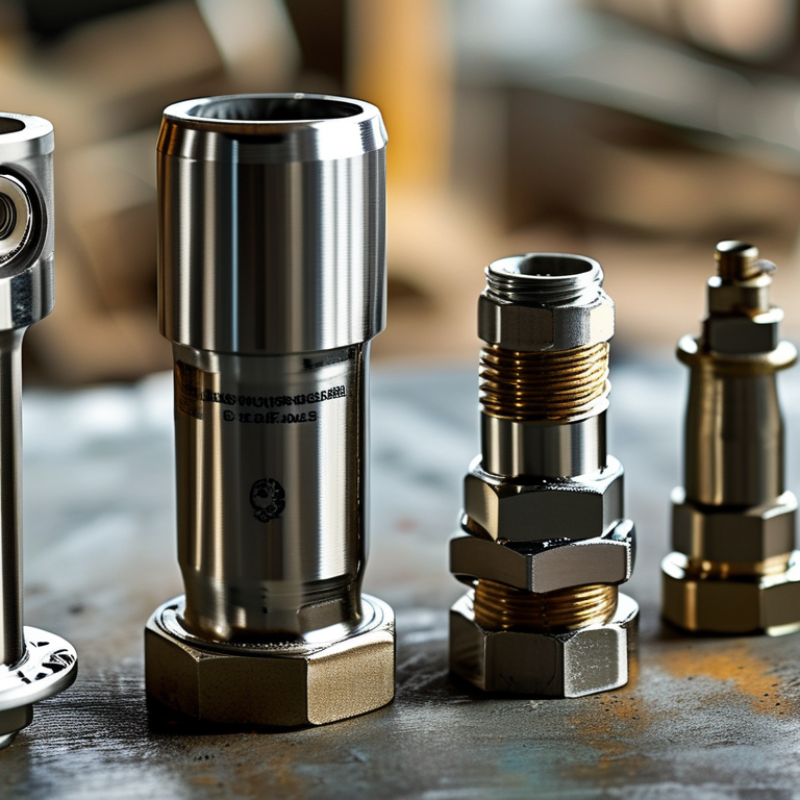
2026 Top Stainless Steel Connector Types for Global Buyers

Stainless Steel Connectors: Definition, Structure, and Core Functions

Stainless steel connectors join pipes, tubes, hoses, and equipment without interrupting fluid flow. Their structure usually includes a body, connection ends, threads or grooves, and sealing surfaces. Some designs also use ferrules, nuts, gaskets, or locking shoulders. Small parts matter.

Threaded connectors rely on controlled engagement between male and female threads. Compression types grip tubing through a ferrule. Flanged versions use bolts and gaskets across a wider sealing face. The correct geometry reduces leakage, vibration, and installation stress. ASTM A182 and ASTM A479 provide common material references for stainless components, while ISO 3506 supports fastener property selection. These standards guide decisions, but they do not replace application testing.

Material choice depends on chloride exposure, temperature, pressure, and cleaning chemicals. Austenitic grades are common because they combine corrosion resistance with practical formability. The World Stainless Association reported 58.4 million tonnes of global crude stainless steel production in 2023. This indicates strong material availability, not guaranteed connector quality. NACE’s IMPACT study estimated corrosion costs at about 3.4% of global GDP, highlighting the value of reliable sealing and inspection. In field work, thread galling remains an underestimated failure risk. A connector can look perfect and still seize during assembly. Buyers should verify certificates, pressure ratings, surface finish, dimensional tolerances, and traceability before approval. One overlooked detail can defeat an otherwise sound design.

2026 Top Stainless Steel Connector Types for Global Buyers

Stainless Steel Connectors: Definition, Structure, and Core Functions

Stainless steel connectors combine a conductive contact system with a corrosion-resistant shell, insulator, sealing elements, and a locking mechanism. The chart shows representative contact-position ranges for connector formats commonly used in industrial, automation, networking, and harsh-environment applications. Actual configurations vary by product standard and design.

Key Stainless Steel Connector Types and Their Typical Applications

Stainless steel connectors support demanding systems, from clean water lines to process equipment. The International Stainless Steel Forum reported global stainless crude steel production at about 58.4 million tonnes in 2023. This scale reflects strong demand for corrosion-resistant components, but connector selection still depends on pressure, temperature, hygiene, and maintenance access.

Butt-weld connectors create smooth, permanent joints in chemical piping, heat exchangers, and high-purity systems. Compression connectors suit instrumentation tubes, laboratory gas lines, and field repairs because they need limited equipment. Threaded connectors remain practical for low-to-medium pressure plumbing and removable assemblies.

Quick-connect couplings help transfer fluids efficiently, although seal wear can become a weak point. Sanitary tri-clamp connectors are common in food, beverage, pharmaceutical, and biotechnology facilities. Flange connections support larger pipelines, pumps, and valves where regular disassembly is expected.

ISO 2037 and ASME B16.5 provide useful dimensional references, but project specifications should control the final choice.

Tips: Match the connector grade with the fluid, not only the pipe grade. Check chloride exposure, crevice risk, vibration, and cleaning chemicals. A 316-type alloy may perform better than a 304-type alloy in chloride-rich service. Yet, no connector is perfect. Over-tightening can damage threads or seals. Poor alignment can stress even a correctly rated joint. Confirm pressure ratings at operating temperature, then inspect installation records before commissioning.

How to Compare Connector Materials, Grades, and Performance

2026 Top Stainless Steel Connector Types for Global Buyers

How to Compare Connector Materials, Grades, and Performance

Stainless steel connectors vary widely, even when they look identical in a catalog. Start with the service environment. A 304 connector often suits indoor equipment, dry machinery, and mild outdoor exposure. For coastal sites, food-processing areas, or frequent cleaning, 316L usually offers stronger resistance to chloride corrosion. It costs more, but replacement work can cost far more.

Grade alone does not prove performance. Check the connector’s tensile strength, hardness, thread accuracy, and working temperature. A 430 stainless connector may perform well in dry, low-corrosion applications, but it is less suitable near saltwater. Duplex grades can provide high strength, though installation may require tighter control. Ask for material certificates and verify whether the stated grade covers the body, spring, pins, and plating.

Field experience reveals small details. A connector exposed to vibration needs stable locking, not just a polished surface. Inspect mating cycles, contact resistance, sealing performance, and torque limits. In one practical test, a poorly aligned thread damaged faster than expected. That result was inconvenient, but useful. It showed that design tolerance mattered as much as material selection. Watch for galling during repeated assembly. Apply only a compatible lubricant, and test it before production use. Temperature changes matter too. A connector that works at room temperature may loosen after repeated heating and cooling. Record those conditions during qualification testing.

Selection Criteria for Global Buyers in 2026

2026 Top Stainless Steel Connector Types for Global Buyers

Selection Criteria for Global Buyers in 2026

In 2026, global buyers should select stainless steel connectors by service conditions, not catalog popularity. Compression fittings suit fast tube installation, while threaded and welded connectors support different pressure and maintenance needs. Push-to-connect designs can reduce assembly time, but seal compatibility deserves close inspection.

For seawater, food processing, and humid plants, 316L often offers better chloride resistance than 304. Still, alloy choice alone cannot prevent crevice corrosion. Ask for chemical composition, heat numbers, and documented mechanical results. Small details matter.

Experienced procurement teams also verify thread standards, end dimensions, pressure ratings, and temperature limits before approval. A fitting that matches a drawing may fail during thermal cycling or vibration.

Request independent or witnessed testing when the application carries serious operational risk. Useful records include material certificates, inspection reports, surface-finish readings, and batch traceability. These documents help engineers investigate a leak months after delivery.

Price alone misleads. Include machining, freight, import duties, spare parts, and replacement time in the landed-cost model. Buyers often discover that cheaper connectors become expensive after thread rework or delayed customs clearance. One weakness remains common: suppliers may provide certificates without matching each item to its heat number. That gap deserves a written corrective requirement.

International Standards, Sourcing Risks, and Quality Checks

2026 Top Stainless Steel Connector Types for Global Buyers

Global buyers now compare compression, threaded, push-in, and sanitary stainless steel connectors. Yet the fitting’s shape is only the starting point. International standards must match the service, not merely the sales description. For pressure systems, review the applicable ASME, ISO, EN, or regional requirements. ISO 3506 may help verify stainless fastener grades, but it does not replace application-specific approval. Thread profiles, pressure ratings, and corrosion conditions still need confirmation.

Sourcing risk often hides behind polished surfaces and low prices. Ask for heat numbers, material certificates, and traceable inspection reports. An attractive certificate can still hide a mismatched lot. That risk is easy to underestimate. Request samples from the intended production batch. Measure thread pitch, body diameter, wall thickness, and sealing surfaces with calibrated tools. Check welds under bright light. Rough crevices can collect chemicals and moisture. For critical orders, independent PMI testing and pressure testing provide stronger evidence. No checklist is perfect. A second review may catch what the first inspection misses.

Tips: Start with a written specification. State grade, connection, size, pressure, temperature, finish, standard, and inspection level. Compare two samples, not photographs. Keep test results, photos, and approved tolerances in the purchase file. Small records prevent large disputes.

FAQS

What factors should guide stainless steel connector selection?

Match the connector to pressure, temperature, fluid chemistry, hygiene, vibration, and maintenance access. Catalog popularity is not enough.

When are butt-weld connectors useful?

Butt-weld connectors create smooth, permanent joints. They suit chemical piping, heat exchangers, and high-purity systems. Installation needs accurate alignment and suitable welding equipment.

Why choose compression connectors?

Compression connectors support quick tube installation with limited equipment. They fit instrumentation tubes, laboratory gas lines, and field repairs. Check for leakage after assembly.

When are threaded connectors appropriate?

Threaded connectors suit removable assemblies and low-to-medium pressure plumbing. Over-tightening can damage threads. That mistake is easy to make.

What are the advantages and weaknesses of quick-connect couplings?

Quick-connect couplings transfer fluids efficiently and reduce connection time. Seal wear can cause leaks. Inspect seals regularly, especially in frequently disconnected systems.

Where are sanitary tri-clamp connectors commonly used?

Sanitary tri-clamp connectors are common in food, beverage, pharmaceutical, and biotechnology facilities. Their smooth, accessible design supports cleaning. Inspect the gasket carefully.

Is a 316-type alloy always better than a 304-type alloy?

Not always. A 316-type alloy may resist chloride exposure better, including seawater and humid plant conditions. Crevices can still corrode either alloy.

What documents should global buyers request?

Request material certificates, heat numbers, inspection reports, surface-finish readings, and batch traceability. Verify every item against its records. Certificates alone may be incomplete.

How should buyers compare connector costs?

Include machining, freight, import duties, spare parts, and replacement time. A cheaper connector may become expensive after rework or delivery delays.

What installation checks matter before commissioning?

Confirm pressure ratings at operating temperature. Check alignment, thread condition, seal installation, and vibration exposure. Review installation records before service. Recheck assumptions.

Conclusion

This guide explains what a Stainless Steel Connector is, how its body, contact elements, seals, and locking mechanisms work, and why these components are essential for creating secure, durable, and corrosion-resistant connections. It introduces common connector types, including circular, rectangular, threaded, push-pull, waterproof, and high-temperature designs, along with their typical uses in industrial equipment, automation, transportation, energy, communications, and outdoor systems.

For global buyers in 2026, selecting the right connector requires careful comparison of stainless steel grades, contact materials, plating, current capacity, voltage rating, temperature range, sealing performance, mechanical strength, and expected service life. The article also highlights practical purchasing criteria such as compatibility, certification, traceability, delivery reliability, and total cost. Understanding international standards, identifying sourcing risks, and applying quality checks—including dimensional inspection, material verification, electrical testing, sealing tests, and sample evaluation—can help buyers reduce failures and build a dependable international supply chain.


Sienna

Sienna

Sienna is a skilled marketing professional with a deep expertise in our company’s core products and services. With a passion for innovation and detail, she plays a pivotal role in crafting insightful blog posts that not only highlight the unique features of our offerings but also provide valuable......