Top 10 Lithium Battery Pack Manufacturers for Global Buyers

Time:2026-10-23 Author:Amelia
0%

Choosing a Lithium Battery Pack manufacturer requires more than comparing prices on a spreadsheet. Global buyers need dependable cells, stable production, clear documentation, and responsive technical support. A pack can appear impressive online, yet fail during cold starts, repeated charging, or sudden load changes.

This guide reviews ten manufacturers serving international markets. The evaluation focuses on battery chemistry, energy density, cycle life, thermal management, and customization capacity. It also considers practical evidence, including factory audits, sample testing, warranty terms, and production traceability. Compliance documents matter too. UN 38.3 testing, transport records, and relevant regional certifications can reduce avoidable shipping and approval problems.

Details matter.

An experienced purchasing team may request a teardown report, inspect weld quality, and compare cell consistency across several samples. However, supplier claims are not always complete, and even reputable companies can have uneven product lines. That limitation deserves attention. A strong manufacturer should explain its testing process, failure-rate controls, and response procedures without hiding behind broad marketing language.

The final ranking is intended as a practical starting point, not an absolute verdict. Application requirements differ between electric mobility, energy storage, medical equipment, and industrial tools. Battery size, operating temperature, protection circuitry, and expected service life can change the best choice. Readers should verify current certifications, capacity data, lead times, and local import requirements before signing a contract. Reliable decisions come from documented performance, careful samples, and honest communication.
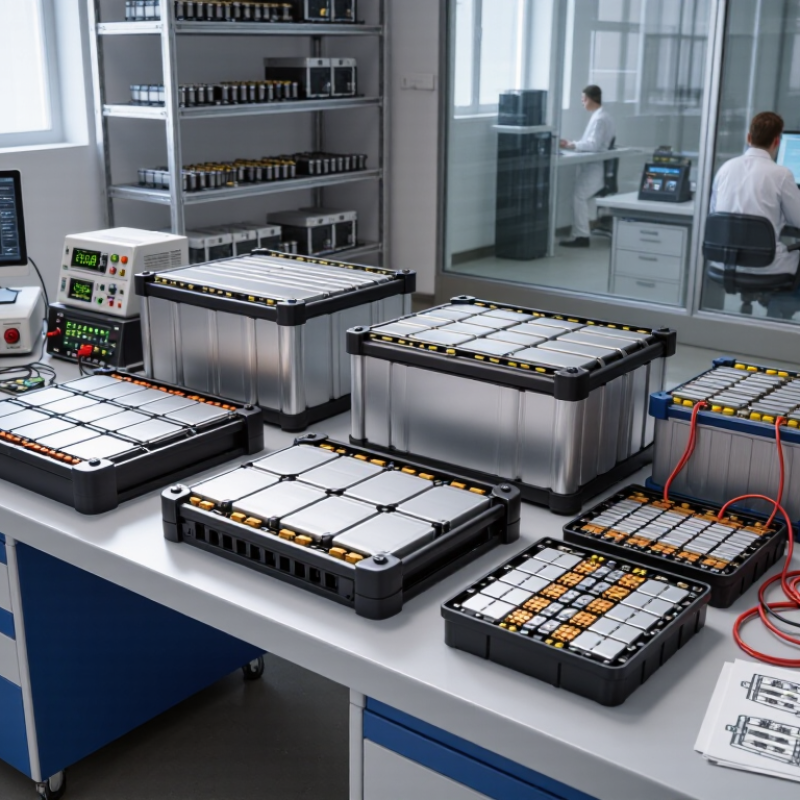
Top 10 Lithium Battery Pack Manufacturers for Global Buyers

Lithium Battery Pack Manufacturing: Scope, Technologies, and Applications

Lithium battery pack manufacturing covers much more than cell assembly. It includes cell selection, electrical design, mechanical housing, software, testing, and traceable production. Manufacturers commonly use cylindrical, prismatic, or pouch cells. Each format changes cooling needs, weight, serviceability, and available space. Lithium iron phosphate offers strong thermal stability and long cycle life. Nickel-rich chemistries can provide higher energy density but demand tighter temperature control. The right choice depends on the duty cycle, not marketing language.

A production-ready pack usually includes a battery management system, fuses, contactors, sensors, and communication interfaces. Engineers test voltage balance, insulation resistance, vibration response, charging behavior, and thermal performance. A pack for an electric delivery vehicle faces different demands than one for medical equipment or solar storage. It may operate in rain, dust, heat, and repeated daily cycles.

Details matter. Reliable manufacturers record cell batches and inspect welds throughout production.

For global buyers comparing ten potential suppliers, factory audits should examine incoming inspection, calibration records, firmware control, and failure analysis. Certifications support confidence, but they do not replace practical testing.

I have seen specifications look excellent while connector protection remained weak. That gap deserves attention.

Design reviews should include transport conditions, local service capability, spare parts, and end-of-life handling. No design is perfect. A transparent supplier admits limitations and improves them.

Standards for Evaluating Global Battery Pack Manufacturers

A reliable battery pack manufacturer must meet more than a low-price target. Global buyers should examine cell traceability, pack design, thermal control, and production consistency. Ask for recent test reports from competent laboratories, not only marketing documents. Relevant standards may include IEC 62133-2, UN 38.3, and applicable regional safety requirements. Requirements differ by market, so confirm them before placing an order.

Factory evaluation should include process audits, sample testing, and quality records. Check welding strength, insulation, battery management system settings, and protection against overcharge or overheating. Review how the manufacturer handles failed cells and customer complaints. A mature supplier can explain corrective actions with evidence. However, no checklist is perfect. Documents may look complete while production quietly changes. Independent verification remains valuable.

Tips: Request production samples from different batches. Compare capacity, voltage balance, temperature rise, and charging behavior. Confirm warranty terms, recall procedures, and spare-part support in writing. Visit the facility when possible, or use an accredited inspection service. Ask who controls firmware revisions and component substitutions. Small details matter. A missing revision number can create serious confusion later. Evaluate communication, too; delayed or vague answers often reveal weak internal control. Reliability is built through repeatable evidence, not confident promises.

Standards for Evaluating Global Lithium Battery Pack Manufacturers

Recommended buyer-side evaluation weights based on widely used battery safety, quality, performance, supply-chain, and lifecycle considerations. Relevant references may include UN 38.3, IEC 62133-2, IEC 62619, ISO 9001, IATF 16949, and applicable regional regulations.

The percentages represent a recommended assessment framework, not market share or performance claims about any specific company. Buyers should adjust the weighting according to application, chemistry, voltage, transport route, and target market.

Top 10 Lithium Battery Pack Manufacturers and Their Core Strengths

The top 10 lithium battery pack manufacturers are separated by capability, not volume alone. According to the IEA’s Global EV Outlook 2024, electric vehicle battery demand exceeded 750 GWh in 2023. China supplied about three-quarters of global battery cell production capacity. This concentration makes supply resilience important for global buyers. The leading ten supplier profiles include high-energy cell specialists, low-cost LFP producers, and premium NMC developers. Their core strengths cover cell consistency, automated assembly, and scalable pack design.

Other strong manufacturers focus on battery management systems, liquid cooling, and rugged commercial-vehicle packs. Some excel in modular systems for buses and forklifts. Others provide stationary storage packs with long cycle life. A few specialize in custom engineering, local service, recycling links, or strict traceability. BloombergNEF reported an average lithium-ion pack price of 115 dollars per kWh in 2024, after a 20% annual decline. Lower prices help buyers, but they can hide weaker warranties or less conservative safety margins. A supplier may look impressive on paper. Factory audits still matter.

Tips: Request cycle-life test curves, thermal data, UN 38.3 documentation, and production traceability. Compare usable energy, not only nominal capacity. Ask where cells, modules, and software are produced. No ranking stays permanent. Chemistry, tariffs, and quality records change quickly. My practical concern is simple: buyers often compare price before failure behavior. That choice can become expensive.

Key Products, Industries Served, and Customization Capabilities

When comparing the top 10 lithium battery pack manufacturers for global buyers, product range matters more than catalog size. Strong suppliers typically offer cylindrical, prismatic, and pouch-cell packs. They may also build modules, rack systems, portable power units, and battery packs with integrated BMS protection. Buyers should check cell traceability, cycle-life testing, thermal control, and documented safety procedures. A polished website is not proof of engineering depth.

These manufacturers commonly serve electric mobility, solar storage, medical equipment, robotics, marine systems, telecommunications, and warehouse vehicles. Each industry demands different performance. A medical device may need stable discharge and compact dimensions. A warehouse vehicle may require high current output, shock resistance, and quick charging. Outdoor storage systems need weather-resistant enclosures, remote monitoring, and dependable temperature management. Real factory experience shows in test records, not only product photographs.

Customization can include voltage, capacity, connector type, enclosure material, mounting points, communication protocols, and charging limits. Some projects also need custom firmware, heating elements, or liquid cooling. Buyers should request samples before approving mass production. A sample may reveal wiring congestion, excessive weight, or inconvenient service access. This step is often underestimated. Manufacturers should also explain their quality controls, inspection stages, warranty terms, and support process across regions. Certification planning must match the destination market and application. Claims about “long life” need measurable test conditions, because results can vary with temperature, charging habits, and load patterns.

How Global Buyers Can Compare Suppliers and Select the Right Partner

Choosing among the top ten lithium battery pack manufacturers requires more than comparing quoted prices. Global buyers should examine cell traceability, pack architecture, testing equipment, and production experience. Ask for recent project records, not polished claims. A reliable supplier can explain capacity tolerance, thermal controls, cycle testing, and protection settings in clear language.

Request samples built with the same cells, casing, connectors, and battery management system proposed for production. Measure voltage consistency, charging time, heat generation, and communication performance under realistic loads. Review reports from recognized laboratories, quality certificates, transport documents, and factory audit records. Check whether the supplier supports applicable shipping, safety, and product regulations in your target market. Small details matter. A missing label can delay an entire shipment.

Compare warranty terms carefully. Define expected cycle life, storage conditions, repair responsibilities, response times, and spare-part availability. Ask how defects are recorded and corrected. During a video or on-site audit, observe material storage, barcode scanning, worker training, and final inspection routines. One supplier may offer a lower price but weaker change control. I have seen buyers focus on energy density and overlook service capacity. That mistake becomes expensive after installation. The best partner may not be the largest manufacturer; it should communicate honestly, document changes, and accept reasonable technical questions. Leave room for uncertainty, because test results can vary with temperature, load profile, and user behavior.

Top 10 Lithium Battery Pack Manufacturers for Global Buyers - How Global Buyers Can Compare Suppliers and Select the Right Partner
Rank Anonymous Supplier Profile Primary Manufacturing Region Core Battery Chemistry Typical Pack Voltage Range Typical Capacity Range Main Application Focus Customization Capability Quality & Compliance Evidence to Request International Shipping Readiness Recommended Buyer Fit
1 Manufacturer Profile 01 East Asia LFP NMC 12 V–800 V 20 Ah–2,000 Ah Electric mobility, energy storage, industrial equipment Cell selection, enclosure design, BMS programming, communication protocols ISO 9001; UN 38.3 test summary; IEC 62619 or UL 1973 where applicable; incoming-cell inspection records Dangerous-goods packaging procedures; battery labels; SDS and transport documentation Global OEMs requiring broad voltage and capacity coverage
2 Manufacturer Profile 02 South Asia LFP 12 V–96 V 20 Ah–600 Ah Solar storage, telecom backup, residential ESS Rack, wall-mounted and floor-standing formats; remote monitoring integration ISO 9001; UN 38.3; IEC 62619; battery management system protection test records Export carton specifications; state-of-charge controls; approved freight-forwarder process Distributors and installers prioritizing safety and long cycle life
3 Manufacturer Profile 03 Southeast Asia LFP NMC 24 V–400 V 30 Ah–1,000 Ah Golf carts, low-speed vehicles, material-handling equipment Mechanical mounting, connector selection, CAN or RS485 communication ISO 9001; UN 38.3; IEC 62619 or equivalent product safety evidence; end-of-line test reports Experience with palletized shipments and multimodal transport documentation Vehicle and equipment manufacturers needing semi-custom battery packs
4 Manufacturer Profile 04 East Asia NMC LFP 24 V–800 V 10 Ah–300 Ah Light electric vehicles, robotics, portable power systems High energy-density layouts, thermal sensors, smart BMS and app connectivity ISO 9001; UN 38.3; IEC 62133-2 for applicable portable products; EMC test documentation Air and sea shipment procedures; product labeling; battery declaration support Buyers seeking compact packs with advanced monitoring functions
5 Manufacturer Profile 05 Europe LFP NMC 24 V–1,000 V 20 Ah–2,500 Ah Commercial energy storage, marine systems, industrial backup System-level engineering, thermal management, cabinet integration and commissioning support ISO 9001; ISO 14001; UN 38.3; IEC 62619; IEC 62477-1 or relevant system standards EU-focused documentation, recycling information and installation manuals Commercial buyers requiring local engineering and compliance support
6 Manufacturer Profile 06 North America LFP NMC 12 V–800 V 20 Ah–1,500 Ah Fleet electrification, telecom, backup power and specialty vehicles UL-oriented design reviews, software integration, enclosure customization and field service ISO 9001; UN 38.3; UL 1973 or UL 2580 where applicable; UL 9540/9540A for relevant ESS projects North American dangerous-goods processes; warranty and service documentation Buyers requiring regional support and North American certifications
7 Manufacturer Profile 07 East Asia LFP 48 V–1,000 V 50 Ah–5,000 Ah Grid storage, microgrids, commercial and utility-scale ESS Containerized systems, rack architecture, thermal management and energy-management interfaces ISO 9001; ISO 14001; UN 38.3; IEC 62619; system-level fire and thermal-runaway test evidence Container loading plans, marine insurance documents and project-specific shipping schedules Large projects where lifecycle cost and bankability are critical
8 Manufacturer Profile 08 Southeast Asia LFP NMC 12 V–144 V 10 Ah–800 Ah Portable power stations, backup units and recreational vehicles Compact enclosure design, USB/DC outputs, display integration and firmware customization ISO 9001; UN 38.3; IEC 62133-2 for portable products; EMC and ingress-protection test records Retail packaging, user manuals, barcode labeling and mixed-container shipment capability Private-label buyers and consumer-product distributors
9 Manufacturer Profile 09 East Asia LFP NMC 24 V–600 V 20 Ah–1,200 Ah Automated guided vehicles, robotics, forklifts and warehouse systems Opportunity charging, CAN communication, battery swapping and fleet-management integration ISO 9001; UN 38.3; IEC 62619; BMS fault-response and cycle-life test data Replacement-pack identification, service-part availability and international warranty process Industrial buyers needing reliable uptime and fleet integration
10 Manufacturer Profile 10 Europe & Asia Supply Network LFP NMC 12 V–800 V 10 Ah–2,000 Ah Custom OEM projects, medical equipment and specialty mobility Low-volume engineering, rapid prototypes, custom connectors and traceability systems ISO 9001; UN 38.3; applicable IEC or UL product standard; cell traceability and change-control records Prototype shipping support, export documentation and controlled engineering-change procedures OEM buyers validating new products before mass production
Buyer comparison note: The profiles above use anonymized, normalized market ranges so buyers can compare supplier capabilities without relying on company or brand names. Confirm every specification, certification, test report, warranty term, production capacity and delivery commitment directly with the shortlisted manufacturer.
Important: UN 38.3 is a transport-testing requirement for lithium batteries. IEC 62619, UL 1973, UL 2580, UL 9540 and IEC 62133-2 apply to different battery products and use cases; the correct standard depends on the final application, market and system design.

FAQS

What does lithium battery pack manufacturing include?

It includes cell selection, electrical design, housing, software, testing, and traceable production. Assembly is only one part.

Which cell format should a buyer choose?

Cylindrical, prismatic, and pouch cells suit different spaces and cooling systems. Consider weight, serviceability, and the product’s available room.

How do battery chemistries affect pack design?

Lithium iron phosphate usually provides strong thermal stability and long cycle life. Nickel-rich cells can offer higher energy density but need tighter temperature control.

What components should a production-ready battery pack contain?

It usually includes a battery management system, fuses, contactors, sensors, and communication interfaces. Protection settings must match the intended load.

How should buyers evaluate a battery pack manufacturer?

Review cell traceability, welding quality, calibration records, firmware control, and failure analysis. Request evidence from recent production batches.

Which tests are important before production approval?

Test voltage balance, insulation resistance, vibration response, charging behavior, and thermal performance. Use realistic loads and changing temperatures.

What should factory audits examine?

Audits should review incoming inspection, material storage, barcode scanning, worker training, and final inspection. Check whether production changes are controlled.

Are certificates enough to prove battery pack reliability?

No. Certificates support confidence, but practical testing remains necessary. Documents can look complete while production quietly changes.

What details should buyers compare between suppliers?

Compare warranty terms, cycle-life expectations, storage conditions, repair duties, response times, and spare-part availability. A lower price may hide weaker service.

What common mistake should global buyers avoid?

Do not focus only on energy density or quoted price. A missing label, weak connector protection, or unclear firmware revision can delay deployment.

Conclusion

The global Lithium Battery Pack industry is evolving rapidly, driven by demand from electric mobility, energy storage, portable electronics, industrial equipment, and backup power systems. This article explains the manufacturing process, major battery chemistries, pack design technologies, thermal management methods, battery management systems, and common customization options. It also introduces practical standards for evaluating manufacturers, including product safety, quality consistency, production capacity, testing procedures, certifications, engineering expertise, and after-sales support.

A focused comparison of leading global manufacturers highlights their different strengths in pack integration, high-energy applications, rugged industrial solutions, scalable storage systems, and application-specific engineering. Buyers can assess suppliers by reviewing cell quality, performance data, lifecycle expectations, protection features, communication functions, delivery capability, and customization flexibility. By matching technical requirements, target applications, budget, compliance needs, and long-term service expectations, global customers can select a reliable Lithium Battery Pack partner and build a safer, more efficient, and commercially sustainable supply relationship.

Amelia

Amelia

Amelia is a seasoned marketing professional with a wealth of expertise in our company’s core offerings. With an unwavering passion for driving growth and innovation, she plays a pivotal role in shaping our marketing strategies and enhancing brand visibility. A key aspect of her responsibilities......