 Dynalink Electronic
Deep-Dive Engineering Guide: Deciphering the Mechanics of OEM Two Pin Headers
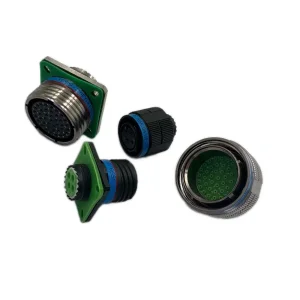
In modern electronic system design, board-to-board and wire-to-board connections represent critical pathways where Signal Integrity (SI) and Power Integrity (PI) must be preserved. The Two Pin Header, while outwardly simple, functions as a highly engineered connector element capable of delivering robust electrical continuity under extreme mechanical stresses. As a leading OEM Two Pin Header Manufacturer, Dynalink utilizes advanced material sciences and precision molding geometries to engineer interconnects that mitigate contact degradation over long-term deployments.
Material Science Behind High-Reliability Pin Headers
The performance of a pin header depends heavily on the base metals and plating methodologies employed. We formulate our contact pins using high-performance copper alloys such as Phosphor Bronze (C5191) for elevated elastic limits and resistance to fatigue, and Brass (C2680) for excellent electrical conductivity in less dynamic environments.
Plating thickness determines the insertion life cycle and resistance to atmospheric oxidation. Our typical OEM stack includes:
- Nickel Underplating (50-100 micro-inches): Acts as a diffusion barrier to prevent copper migration through the outer gold layer.
- Gold Plating (from Gold Flash up to 30u"): Ensures ultra-low contact resistance and prevents fretting corrosion in harsh environments.
- Tin Plating (Matte Tin): Optimized for solderability in automated reflow and wave soldering processes.

Key Technical Specifications Table
The following parameters represent our standard capabilities, customizable to meet specific military, aerospace, or automotive standards:
| Technical Characteristic | Standard Specification Range | High-Reliability/Aerospace Limit |
|---|---|---|
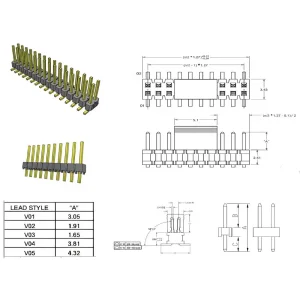
| Pitch Options | 1.27mm, 2.00mm, 2.54mm | Custom micro-pitch down to 0.50mm |
| Rated Current | 1.0A to 3.0A per contact | Up to 5.0A with optimized heat dissipation paths |
| Insulation Resistance | ≥ 1000 MΩ | ≥ 5000 MΩ at 500V DC |
| Dielectric Withstanding Voltage | 500V AC/RMS | 1000V AC/RMS for high-voltage aerospace configurations |
| Operating Temperature | -40°C to +105°C | -55°C to +125°C (utilizing Liquid Crystal Polymer housing) |