Explore our core product lineup, ranging from smart portable power stations and jump starters to proprietary industrial connectors.
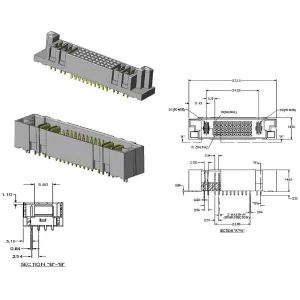
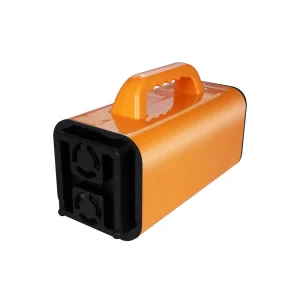
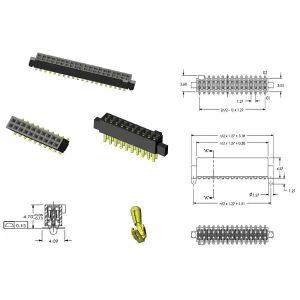
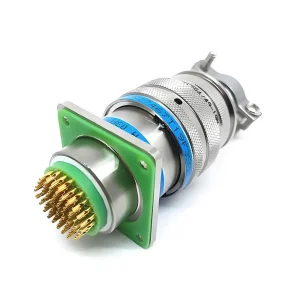
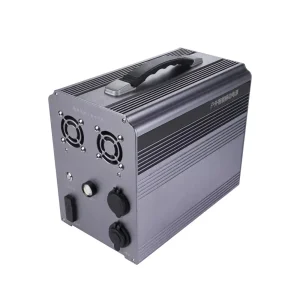
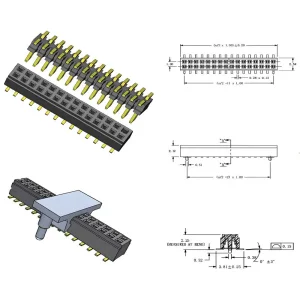
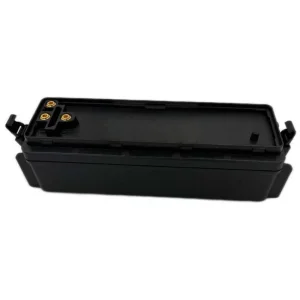
The shift toward high-performance, solid-state, and high-discharge energy deployment systems.
In the contemporary automotive and heavy industrial sectors, emergency starting technologies have undergone a profound paradigm shift. Historically dependent on bulky, low-density lead-acid booster packs, the modern enterprise market now mandates highly integrated, ultra-compact lithium-ion and supercapacitor-hybrid starting systems. The demand for reliable power delivery systems is driven by multiple converging factors: the rise of last-mile logistics fleets, the scaling of cold-chain transportation infrastructures, and the expansion of marine and off-grid utility sectors operating under extreme thermal envelopes.
Industrial applications present rigorous environments that standard consumer-grade jump starters fail to satisfy. Fleet management operators, municipal emergency services, and agricultural machinery groups require jump-starting hardware capable of withstanding prolonged sub-zero temperatures down to -40°C while delivering peak cranking current exceeding 3,000 Amperes. Under an ODM procurement framework, engineering design must prioritize transient thermal dissipation, multi-cell balancing algorithms, and interface connections that resist contact resistance decay over thousands of high-discharge cycles.
Unlike standard consumer units, industrial compact jump starters are integrated tools within fleet operational pipelines. A single point of contact failure can mean thousands of dollars in commercial downtime. High-rate lithium cobalt oxide (LiCoO2) and lithium iron phosphate (LiFePO4) chemistries are coupled with sophisticated Battery Management Systems (BMS) to optimize safe energy discharge rates while preventing thermal runaway during intense starting sequences.
A technology-driven design and precision manufacturing leader established in 2007.

Dynalink Electronic Technology Co., Ltd. (DL), established in 2007, currently maintains a highly specialized workforce of over 800 employees, with over 200 technical R&D and engineering staff. As a technology-driven manufacturing enterprise, we specialize in high-reliability power supplies, custom energy storage capacitors, and high-frequency, low-loss connectors.
Through continuous investment in material science and automated precision engineering, DL has built a vertical, fully integrated industrial chain. Our operations encompass material R&D, structural design, complex mold building, and highly automated SMT/assembly pipelines. This vertical integration allows us to supply high-reliability components across aviation, aerospace, shipping, rail transit, new energy vehicles, and robotic applications.



How our localized supply chain synergy optimizes cost, quality, and time-to-market.
China's dominance in the advanced lithium-ion and electronics manufacturing sectors is not merely a product of scale, but of deep supply chain integration. In the production of compact jump starters, the distance between material refinement, battery cell design, printed circuit board (PCBA) manufacturing, and precision testing centers is minimized. This geographic clustering enables rapid prototyping and rapid adaptation to customer specifications, saving months in the overall product development lifecycle.
Dynalink operates at the nexus of this efficient ecosystem. By controlling the production of critical components—specifically high-current connectors and low-ESR energy storage capacitors—we bypass external supplier dependencies that disrupt other OEMs. Furthermore, our proximity to global shipping hubs in Shenzhen, Guangzhou, and Hong Kong facilitates seamless ocean freight, air express, and international logistics, ensuring raw sourcing and finished product delivery schedules remain highly predictable.
We configure batteries to handle high energy output, rapid charging rates, and stable voltage control systems to support unmanned aerial vehicles (UAVs) in critical operations.
Our high-speed connectors and stable power supplies safeguard large-scale data facilities against power drops and signal attenuation, ensuring uninterrupted operation.
Our heavy-duty, high-IP rating connectors provide robust signal paths and stable electrical feeds to machinery operating under demanding environmental stressors.
Utilizing our digital CAD/CAE design environment, we translate specifications into prototypes, optimizing mechanical layout and thermal dynamics ahead of production.
We invest heavily in developing next-generation energy storage components, aiming to improve solid-state battery integration and capacitor energy densities.
Tailoring peak electrical performance to the harsh environments where work gets done.
An ODM compact jump starter is not a one-size-fits-all product. Different geographic markets and industrial sectors present distinct ambient environments and operational demands. By matching the internal electronics and mechanical casings to the target application, we ensure optimal starting power and durability.
In regions such as Scandinavia, Northern Canada, and the Siberian plains, ambient temperatures routinely drop below -30°C. Standard lithium chemistry experiences significant internal resistance increases in these conditions, rendering the starting system temporarily ineffective. Our cold-weather engineering designs utilize smart heating elements integrated within the battery housing. Drawing a fraction of the charge, the system pre-warms the cells to 0°C prior to discharge, ensuring full cranking power is available on the first attempt.
Marine jump-starting solutions require robust sealing against corrosive atmospheres. Humidity, direct water splash, and salt buildup can compromise standard jump starter clamps and charging ports. Dynalink builds marine-grade starting devices with IP67-rated waterproof housings, gold-plated high-current connectors, and heavy-duty copper clamps coated with anti-corrosive chemical layers. Our designs prevent electrical tracking and short circuits in damp marine engine rooms.
Civil infrastructure networks, long-haul trucking operations, and diesel fleet yards operate on tight schedules. These operations require robust starting units capable of cycling through multiple high-current discharges without overheating. We utilize high-thermal-mass aluminum heat sinks linked directly to the BMS thermal management circuit. By dissipating heat away from the battery cells, our jump starters can start multiple heavy commercial vehicles back-to-back.
Developing reliable batteries, capacitors, and connectors to power modern industry.
Our focus centers on three key areas: advanced batteries, high-energy-density capacitors, and low-loss connectors. By investing in these fields, we strive to overcome technological limits, developing solutions that deliver reliable power to key sectors worldwide.
We strive to empower life with technology and create a sustainable future. Through integrity, innovation, and collaboration, we work to build integrated system power supply solutions that meet the changing needs of the industry.
We foster a collaborative work environment, focusing on the professional growth of our employees. Our technical staff receive comprehensive training to keep our manufacturing and engineering capabilities at the forefront of the industry.
We continuously refine our battery management systems, capacitor layouts, and connector tolerances. This focus allows us to design high-discharge jump starting systems that operate reliably under demanding conditions.

Next-generation power solutions and materials driving the emergency starting industry forward.
Future designs are integrating supercapacitors directly alongside high-rate lithium batteries. Supercapacitors handle the massive initial surge current requirement (up to 4000A) without degradation, while the lithium-ion core recharges the capacitors in seconds, protecting the battery's lifespan and improving safety.
Smart clamp design has shifted from simple green/red LEDs to microcontrolled diagnostic interfaces. Modern units read vehicle alternator health, evaluate battery degradation, detect circuit faults, and display real-time safety warnings, preventing accidental short circuits or polarity issues.
Modern emergency starting packs are evolving into multi-functional power hubs. Integrating high-wattage bidirectional Power Delivery (USB-C PD 100W to 140W) allows users to fast-charge laptops and heavy equipment, as well as recharge the jump starter itself in under an hour.
Key technical parameters and quality assurance steps to review before selecting an ODM manufacturing partner.
Evaluating an ODM manufacturing partner for large-scale jump starter supply requires reviewing several critical standards. Since emergency starting devices store high energy densities and release high electrical currents, design oversights can lead to product recalls and liability concerns. Below is a checklist of critical specifications that procurement teams should verify during factory audits:
Verify whether the factory uses Lithium Cobalt Oxide (LiCoO2) for peak transient current or Lithium Iron Phosphate (LiFePO4) for safety and longevity. Ensure the BMS features hardware-level protection for over-current, reverse-polarity, thermal cut-off, and over-charging.
Ensure the manufacturer holds current international certifications, including UL2743 (Safety Standard for Portable Power Packs), CE, FCC, RoHS, and UN38.3 (Transport Safety Testing for Lithium Batteries), allowing for legal distribution worldwide.
Examine the build quality of the jump starting clamps and internal connections. The connection cables must feature thick gauge copper wire (typically 8AWG or 10AWG) and low-resistance socket interfaces to minimize heat buildup during high-amp starting cycles.
Answers to common technical, logistics, and manufacturing questions from enterprise procurement managers.
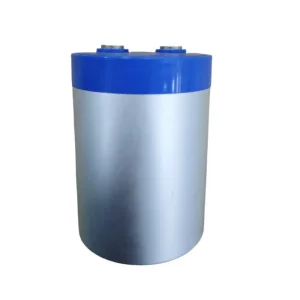
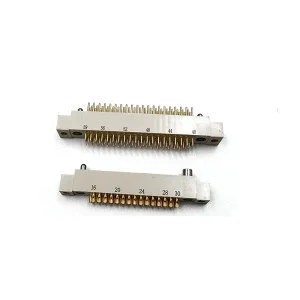
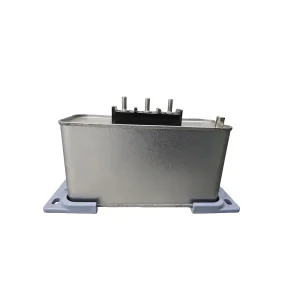
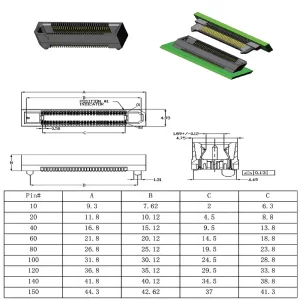
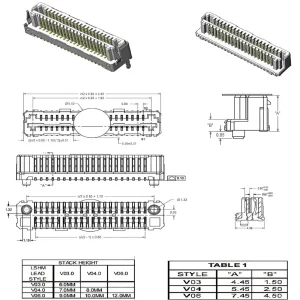
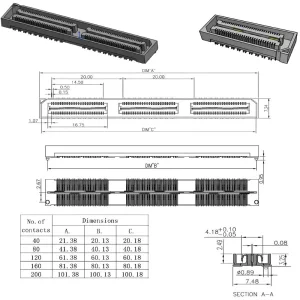
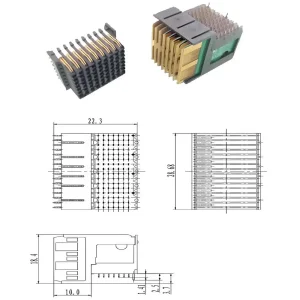
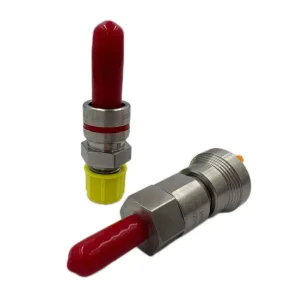
A complete selection of low-loss connectors, self-healing capacitors, and power accessories manufactured by Dynalink.
 Dynalink Electronic